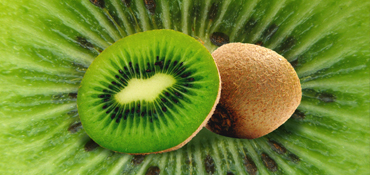


The long journey of kiwifruit from China to Italy
The history of kiwifruit starts in China, in the valley of the Yang-tse River, where it grows wild. Its Chinese name was "yangtao" and it soon became fashionable at the court of the great Khans thanks to its special flavour and its emerald green colour. At that time, the yangtao grew wild as a vine clinging to trees.
The rest of the world discovered kiwifruit only in the 19th century, thanks to a British collector of the Royal Horticultural Society who sent home some specimens and their seeds. From England the yangtao seeds reached New Zealand, then the United States for the first time in 1962, where it was called Kiwifruit, in honour of the bird which is the national symbol of New Zealand.
The plant of the Hayward kiwifruit arrived in Italy around 1970 and was mainly cultivated in Emilia Romagna, Lazio, Piedmont and Veneto. Today Italy, thanks to its climate and the passion of its farmers, is the second world producer after China and it is the largest exporter.
In recent years new kiwifruit varieties, both with green and yellow flesh, belonging to the A. deliciosae A. chinensis species, have become available on the market along with the traditional Hayward variety, thus broadening consumption opportunities and extending the ripening schedule.